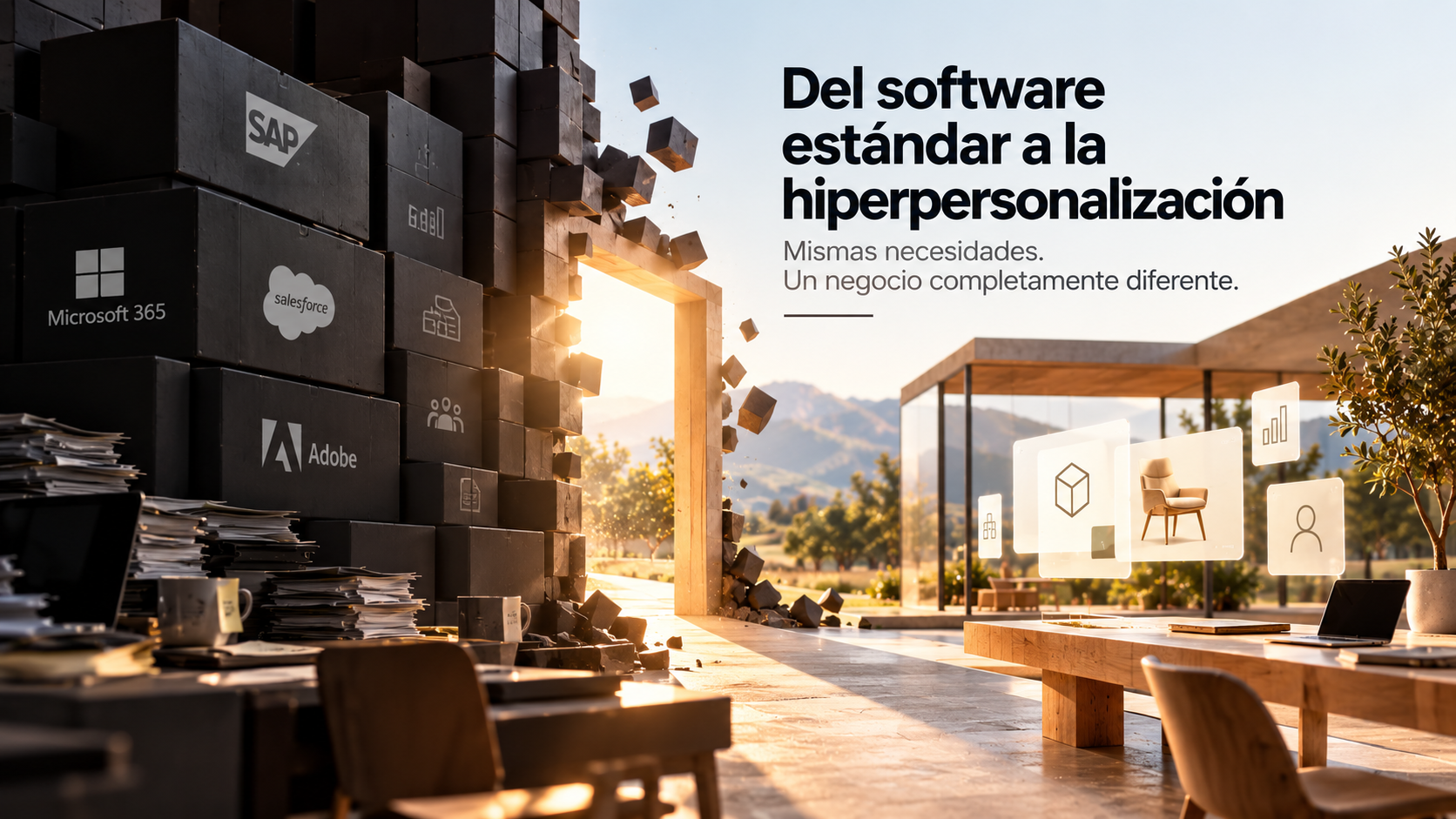
For years, we have assumed that some of our processes had to adapt to the software. And that has made sense. Standard software has given us access to mature, secure solutions maintained by major vendors without having to bear the cost of developing them internally. The problem begins when we confuse standardizing what is common with standardizing what truly differentiates our business.
Especially in SMEs, not every process fits neatly into a solution designed for thousands of different organizations. We configure as much as we can and, when we reach the limit, exceptions begin to appear: manual processes, Excel spreadsheets, integrations, additional modules, or people who end up working in a particular way simply because that is what the tool allows.
There is another issue that I believe we should question more often from both technology and leadership: the real cost of the software ecosystems we are entering. Once we adopt certain platforms, there is a tendency to address every new need by adding another module or expanding licenses within the same ecosystem. It is convenient, integrated, and reduces some complexity, but that does not necessarily mean it is always the most efficient decision.
We can end up using extraordinarily comprehensive solutions to meet relatively simple needs. We pay for dozens of features while perhaps using only a small portion of them. More importantly, even that small portion may not fully adapt to our sales model, our processes, or the way we work.
There is a question we should ask ourselves more often: do we really know the return on our software licenses?
We usually know their annual cost, the number of users, or the price of adding a new module. Yet we do not always know with the same precision how much time they save, how many errors they prevent, what productivity they generate, or what percentage of the capabilities we pay for we actually use.
This is not about questioning standard software. It is about managing technology as an investment rather than simply as a recurring cost that we renew because it is already part of our ecosystem.
And this is precisely where I believe AI is changing an important part of the equation. Until recently, the alternative to standard software was custom development, with analysis, development, maintenance, and evolution costs that made it difficult to justify for many needs. Today, that barrier is beginning to fall significantly.
This allows us to consider a different strategy: buy what has already been solved well, configure when that is enough, integrate when it makes sense, and build when a genuine business-specific need justifies it.
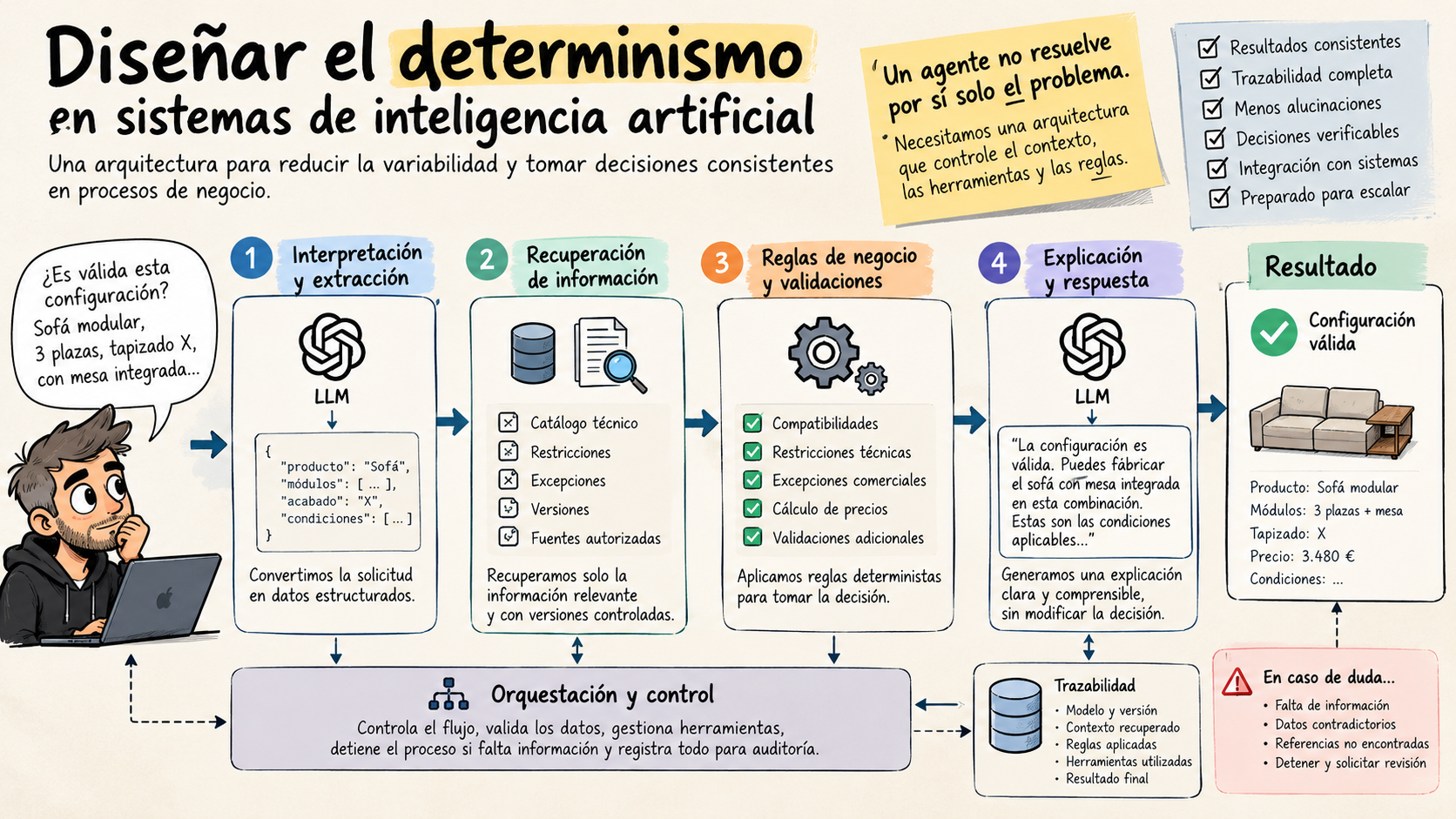
In our case, for example, we are applying this principle to the evolution of product management. We are building our own PIM because we need the information, processes, and experience to adapt to the reality of our products and our business. Not because internal development is better by definition, but because in certain areas the degree of specialization makes it worthwhile to control that capability and evolve it according to our needs.
But this brings an important responsibility: the fact that building is now more accessible does not mean we should build everything.
In fact, I believe AI requires us to be even more rigorous in our technology decisions. Every initiative should be tied to a business outcome and a way to measure it: time saved, productivity, fewer errors, operating cost, adoption, time to market, capacity released, or increased revenue. We should apply exactly the same standard to the software we buy and the software we develop.
That is why I am increasingly unconvinced by discussions about the “ROI of AI.” The return does not come from using AI. It comes from reducing a three-hour process to thirty minutes, cutting errors, eliminating tasks that add no value, or enabling one person to do something that previously required several tools or departments.
Technology is the enabler. The value lies in the outcome.
I believe this is where the real opportunity lies for many companies, especially SMEs. For years, we have had to choose between adapting to the limits of standard software and accepting the cost of building custom solutions. AI is narrowing the gap between those options and making a level of personalization that was once reserved for organizations with large technology teams economically viable.
This also changes the role of technology leaders. It is no longer simply about choosing tools. It is about deciding where to standardize, where to differentiate, where to invest, and where not to, while understanding the total cost and, above all, measuring the value returned by each decision.
Perhaps hyperpersonalization is not about having more software. Perhaps it is about having the software we need, where we need it, with a return we can demonstrate.