Attending GoDigital Summit 2026 was valuable above all for something I appreciate more and more: stepping away from the day-to-day for a few hours, listening to how other organizations are tackling their challenges, and testing whether the direction we are taking makes sense beyond our own reality.
I do not mean looking for easy validation or assuming that, because others are working on similar problems, our decisions must automatically be right. Technology and transformation involve far too many variables for universal recipes. I mean something much more useful: checking whether we are asking the right questions, whether the problems we have identified truly matter, and whether the lines of work we are pursuing align with trends emerging among companies, experts, and technology leaders operating in very different contexts.
I found that comparison particularly reassuring.
For much of my career, I have worked very close to software development, on projects for large organizations and in environments such as banking, where you quickly learn that a good solution is not simply one that works. It must be maintainable, secure, predictable, and able to minimize risk as much as possible when it reaches production.
Over the years, the way I look at technology has broadened. I still enjoy the technical side enormously, but I am increasingly interested in everything that happens before and after a solution is built: understanding the problem properly, analyzing the process, identifying who owns it, knowing what information they need, assessing risk, and measuring its real impact once it is in place.
That is why several of the ideas discussed at GoDigital resonated so strongly with me.
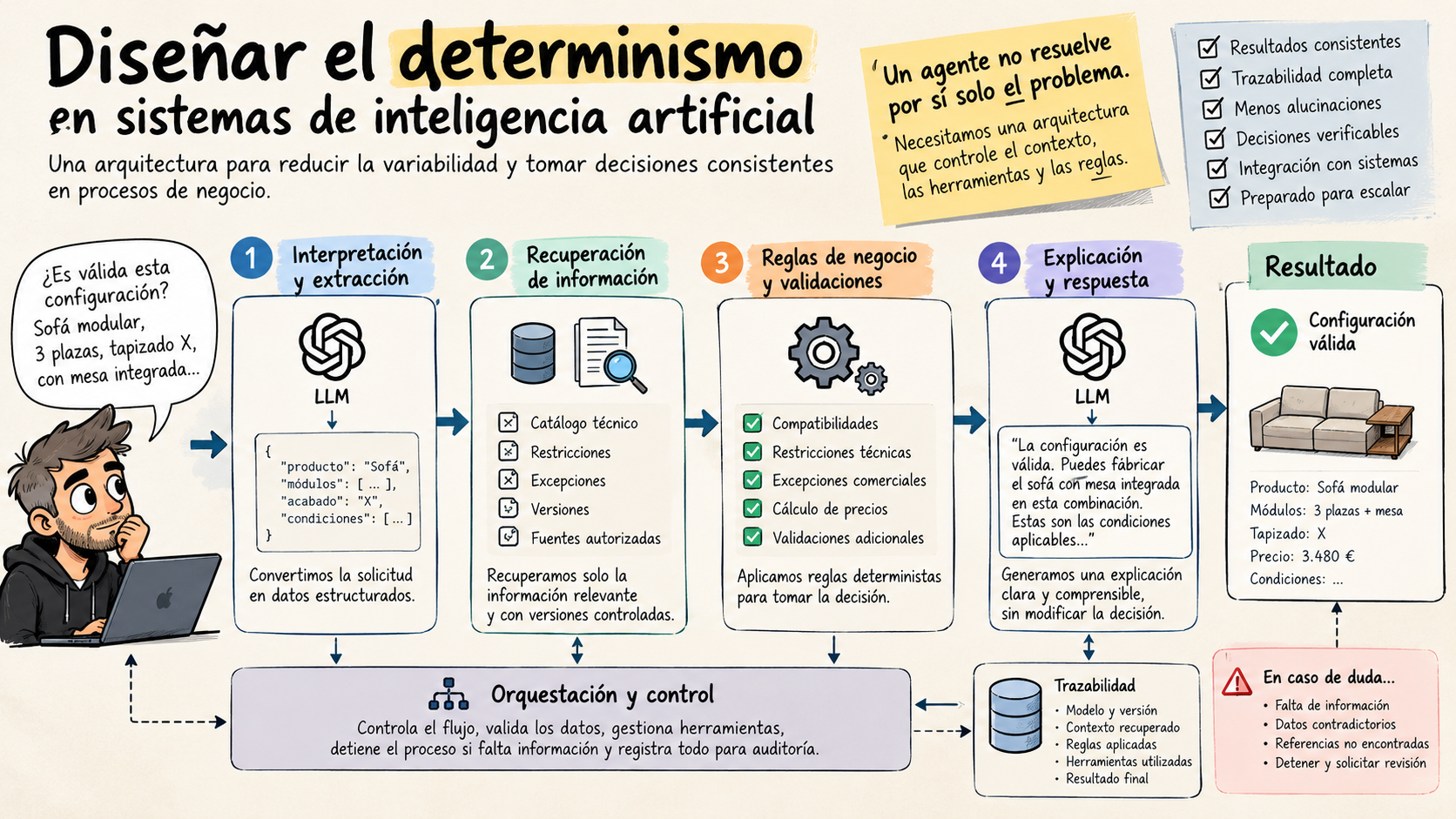
One was the need to put processes back at the center. Before talking about automation or artificial intelligence, we need to understand how a process actually works, its current state, where the friction lies, who maintains it, and how it should work in the future. Too often, we start with the tool and end up adapting the process to its limitations, when it should be exactly the other way around.
Another reflection I found especially interesting came from Fernando López of Navertia, around a hybrid model of buying, integrating, and building. I strongly identified with that view because it reflects a reality we are experiencing: it makes no sense to develop what the market already solves well, but neither should we give up on building specific solutions when a differentiating process genuinely forms part of the company's knowledge.
Artificial intelligence is also changing that equation. Some internal developments that would have been difficult to justify a few years ago because of their cost or effort can now be approached differently. This makes it possible to adapt tools more closely to our processes, simplify experiences, and reduce technical dependencies. Not because we should build more software, but because we can now be much more selective about where building it is worthwhile.
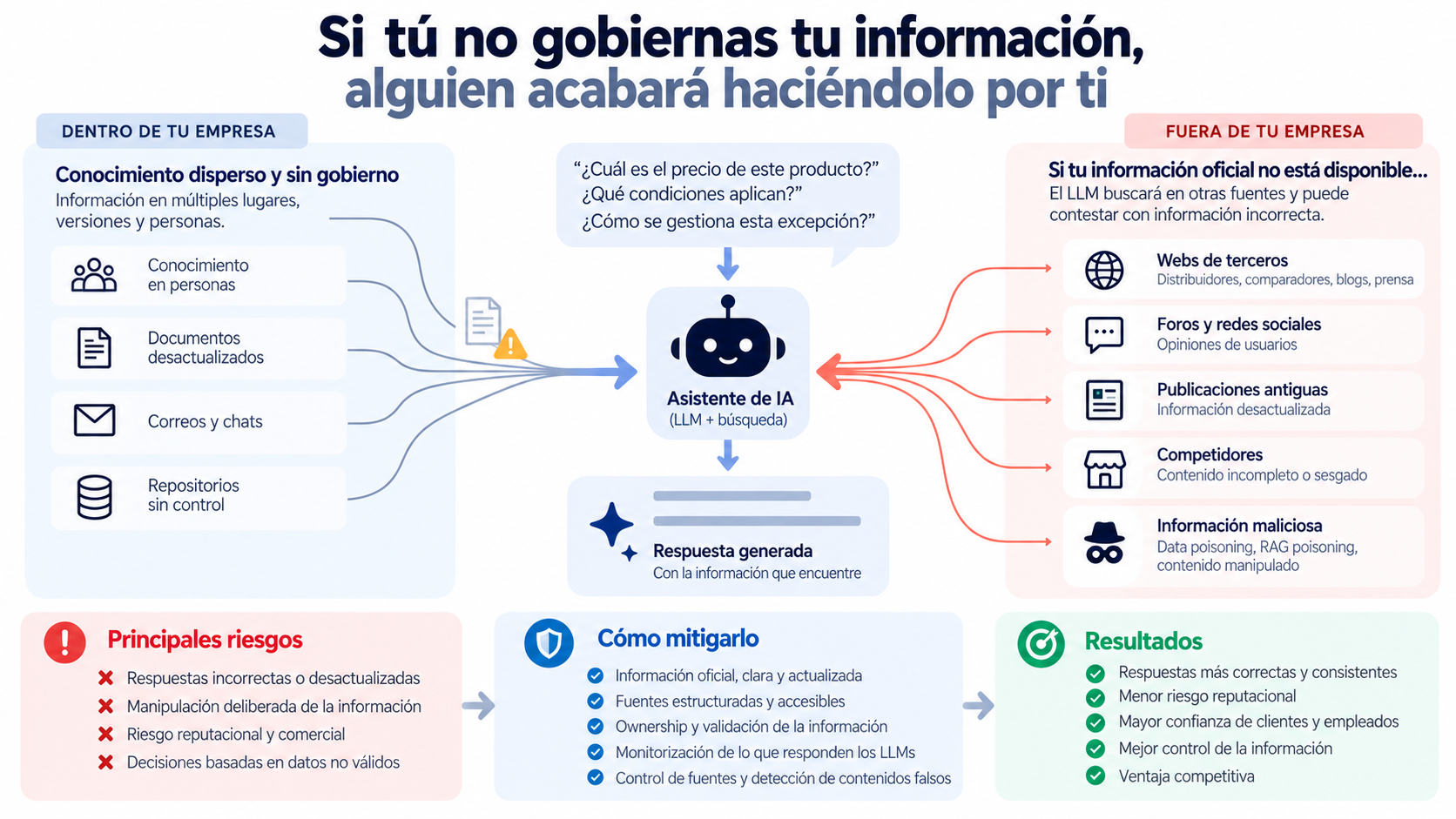
The discussions around information governance also reinforced my thinking. For years, we have accumulated documents, intranets, and SharePoint spaces containing a vast amount of knowledge, but having information does not necessarily mean governing it. Once we begin using agents and models capable of retrieving information automatically, questions such as ownership, sources of truth, freshness, and permissions stop being secondary concerns and become a central part of the architecture.
In that sense, hearing people discuss context, outdated information, and oversharing immediately connected with many of the decisions we have been making around PIM, Data Lake, data governance, and source control. AI is not creating all these problems, but it is making them much more visible.
Perhaps one of the reflections I most want to carry forward concerns return.
In technology, we are quite good at explaining what we are going to build. From a leadership position, however, we must be equally capable of explaining what problem we are solving, how much that problem costs, and how we will measure the improvement. Not everything has to translate directly into revenue; it can also mean productivity, risk reduction, capacity, speed, or quality. But it has to be measurable.
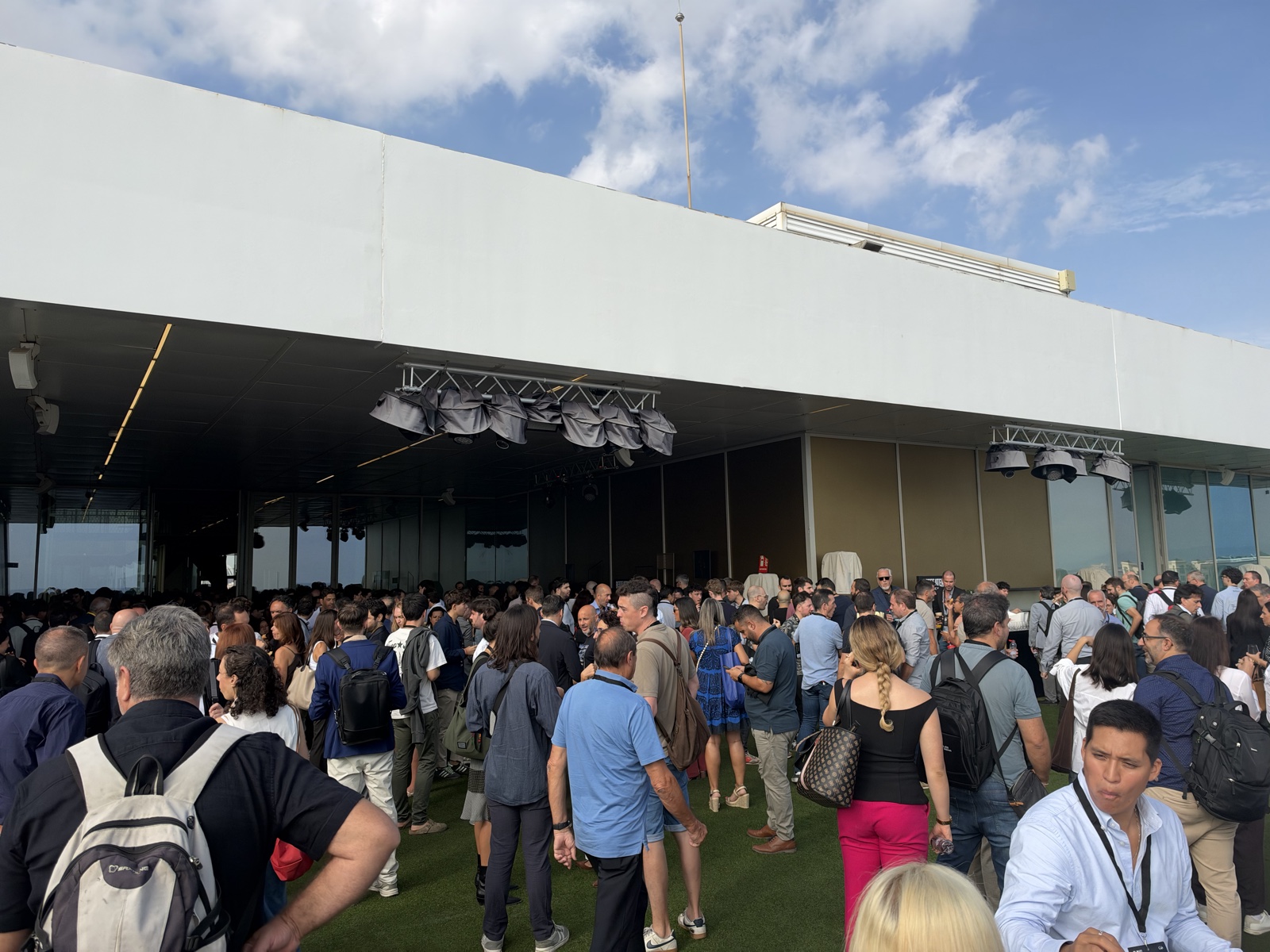
Beyond the talks, I continue to value the human side of these events enormously. It was a pleasure to meet Héctor Badal again, who was hosting the CIO section, and to reconnect in person with José Antonio Bravo after such a long time. Those conversations, together with networking with other professionals, help us share experiences, hear different points of view, and step outside our own bubble.
The day also concluded with the CIO Awards, and hearing about projects that have succeeded in turning transformation into reality is always inspiring. Behind those awards are teams, difficult decisions, existing systems, processes that had to change, and a great deal of work that is rarely visible in the final presentation. Examples like these create motivation, but they also help put the road ahead into perspective.
If I had to summarize what I am taking away from this edition of GoDigital, I would not choose any particular technology. I would choose the importance of going out to listen and compare perspectives.
Because reaffirming a direction does not mean becoming complacent. It means checking that some of the decisions you are making also make sense outside your own context, then using that confirmation to raise the bar even higher.
For me, that means something very clear: continuing to work on processes, governance, architecture, and solutions that create real value, while becoming increasingly rigorous about demonstrating the impact they have on the business.